
Arzel Zoning
An Arzel zone system can solve several comfort issues for your customers. How do you know when to recommend Arzel, and when you need to look for another solution? Here’s what an Arzel Zoning system can do, and what it can’t. Find the best solution for your customer’s needs with this guide.
An Arzel zone system is a great solution for temperature variances. For example, many two-story homes are too hot on the second floor or too cold on the first floor. You can solve this problem by creating a zone for each floor. You’ll put a thermostat on each floor, and then each floor will only get the conditioning it needs.
In the summer, the second floor will be able to get the full cooling power of your system when the first floor is satisfied. Both floors will be more comfortable. In the winter, the first floor will get the extra heat it needs without overheating upstairs.
Another common comfort problem is that one room that’s never the right temperature. Maybe it’s a large living room with vaulted ceilings and it never gets cool enough in the summer or warm enough in the winter. As long as there is adequate ductwork serving the room, an Arzel zone system is a good fit here too. The large room will be its own zone. It will call for conditioning more often than other parts of the home. The system will spend some of its runtime serving only that room, so it gets the extra conditioning it needs without over-conditioning other areas.
An Arzel zone system also works well with rooms that have large windows or more exposure than the rest of the home. In these applications, that room just bakes in the summer sun all day. It will need more cooling than other areas. Or it bears the brunt of the winter wind, and needs more heating than other rooms. Make this room a zone, and it can get the heating and cooling it needs without overwhelming the rest of the house with extra conditioning.
Just about every home has areas that are only used some of the time. For example, most of us use the bedrooms only at night and the kitchen and living room only during the day. In a lot of homes, no one is home all day so every area is unused at times. There may also be rooms that are never used, especially for empty-nesters or anyone with an extra bedroom. Why waste energy and money keeping those rooms comfortable when no one is there?
An Arzel zone system is a great fit for homes with areas that aren’t used all the time. In many applications, contractors group the bedrooms into one or two zones, and then they group the living areas into one or two zones. This way, you can have a bedroom thermostat that is programmed to make the bedrooms comfortable an hour before bed, then set the temperature back after everyone is up. The thermostat(s) in the living area can do the opposite. They will keep the kitchen, dining room, and living room comfortable during the day when they are in use, then set them back at night when no one is using those spaces.
Grouping together rooms based on usage has two benefits. First, it has the potential to save your customers money, since they won’t be paying to heat and cool spaces they aren’t using. But it’s not only good for energy savings. The second benefit is that every room will be the temperature they want at the right time. Instead of adjusting the whole-house thermostat before they go to bed, they will just set their bedroom thermostat to adjust for them. It’s pretty nice to walk into a bedroom that’s already the perfect temperature for sleeping.
An Arzel zone system can help when there’s an area that tends to get too hot or too cold. The specific comfort solution here depends on why the area is uncomfortable. Here’s what to do with a room that is over-conditioning, and how to fix an area that is not getting enough conditioning.
Maybe your customer has made the smallest bedroom into an office, and the office is getting too much conditioning. They’re uncomfortable all day. You know exactly why it’s happening, too: the smallest bedroom has the same amount of ductwork as every other bedroom, but since it’s smaller it doesn’t need as much conditioning. Maybe it’s closer to the equipment, too.
One room is usually too small to be a zone by itself, because it can’t handle the full CFM of the equipment. In these cases, you can add our Smart Zone to your board and make this room a slave zone. That means the zone will still have its own thermostat, but it won’t be able to turn on the equipment by itself. It will only get conditioning when another zone is also calling. Since the problem here is over-conditioning, that should work just fine! Anytime the Smart Zone needs conditioning, it will open its dampers if another zone is calling. When it’s satisfied, it will close its dampers so it doesn’t get too much conditioning.
We also offer a standalone product that can solve over-conditioning problems without installing a zone system for the whole home. The Arzel AloneZone is a panel that operates dampers for one zone. It does not turn the equipment on or off. The AloneZone opens the dampers when it needs conditioning, and closes them when it doesn’t.
If the problem area is uncomfortable because it’s not getting enough conditioning, then an Arzel zone system can be a good solution. You might be able to make this area its own zone. Then its thermostat will make sure it gets enough conditioning even if other areas are already satisfied. We recommend avoiding tiny zones, so make sure the under-conditioned area is large enough to be its own zone.
If the under-conditioned area is too small to be its own zone, then you’ll need to combine it with some other areas to create a large enough zone. The under-conditioning issue will probably improve just because the zone will call for conditioning separately from other zones. To be extra sure that space is comfortable, you could consider placing the thermostat for the zone in the under-conditioned area.
A wild run is another possible solution for under-conditioning. A wild run is a length of ductwork that doesn’t have any dampers. The wild run will get conditioning whenever any zone calls.
Sometimes Arzel is not the right solution. If there’s not adequate ductwork, you won’t be able to fix that problem with a zone system. You may be able to improve it some, but Arzel depends on ductwork and it can’t fully compensate for ductwork issues.
Arzel zone systems are designed for forced-air systems. If you don’t have forced air it’s probably not the right solution. However, we do have some wiring strategies that can combine forced air with other conditioning sources like hydronics, boilers, and wood-fired stoves.
Have a question about how to design your Arzel zone system? We can help with that! Ask an application question and one of our technicians will help you figure out the best design for your Arzel zone system. To learn more about Arzel system design, see our article on how to install a zone damper system. You’ll learn the 5 rules of zoning, and how to apply them to create an effective zoning system.

There are three main steps to installing a Pro Panel zone control system: Install the dampers and tubing. Install the panel and thermostats. Connect to the Arzel Pro app to configure the Pro Panel for your installation. After you complete these three steps, your customer will feel the difference immediately. This is one of our […]

Our new Pro Panel control can zone up to 16 zones. That’s twice as many as our biggest AirBoss, and four times what our HeatPumPro can do. With 16 zones possible, the Pro Panel can be a zoning solution for more light commercial buildings and large houses. On top of the additional zones that are […]
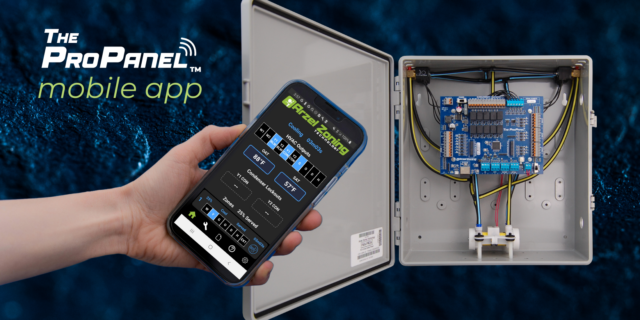
The Arzel Pro Panel app gives contractors more control, easier setup, and better troubleshooting capabilities. All of that comes in a no-nonsense package. The app is simple to connect and doesn’t require Wi-Fi or cell service. We’re proud that the Arzel Pro app makes the Pro Panel our most customizable panel. And it’s still easy […]
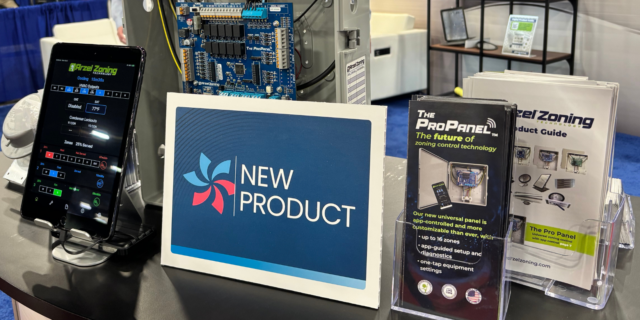
App-controlled HVAC zoning panel is feature-rich and highly customizable; pairs with trusted Arzel dampers Cleveland, OH (Feb. 10, 2026) – Arzel Zoning Technology, a trusted name in HVAC since 1983, is proud to announce a new zoning control: The Pro Panel™. This universal zoning control offers advanced control and a feature rich system, all with […]