
Arzel Zoning
When you’re considering zoning a building, one of the most important steps of zoning evaluation is measuring ductwork capacity, or how many cubic feet per minute (CFM) the duct can deliver. This post will discuss the importance of measuring the CFM capacity of a building’s ductwork. We’ll provide an overview of the process for calculating CFM so you can properly evaluate a structure for zoning.
Zoning divides a building into different temperature zones to allow custom comfort profiles for the occupants. Zoning enables building occupants to take control of their airflow and improve the effectiveness of their heating and air conditioning system.
Zoning creates controlled restriction in the HVAC system. If too much restriction is made, the HVAC equipment could be damaged. By measuring the ductwork, you can evaluate the size of the zone to prevent overstressing the equipment.
Ideally, the minimum size of a zone should be 35% of the ductwork (CFM) for a single-stage blower. For a two-stage blower, zones can be as small as 25% of the ductwork (CFM) when you use the zone weighting feature.
When following the minimum zone size, the ESP of a system with the smallest zone should be around 0.2 inches w.c. When all zones are opened, the ESP should be about 0.08″ to 0.1″ w.c. If we get too high, say greater than 0.25 inches, the customer may have a complaint about airflow noise. Often when airflow noise is a problem we’ll find that the TESP of the blower unit exceeds the maximum according to its blower performance data chart, which is usually around 0.8″. This is where equipment damage can occur and why understanding static pressure is essential.
Airflow capacity can be calculated by multiplying the velocity (FPM) by the sq. in. (Cross-section) and dividing by a square foot or 144 inches. The nominal design velocity should be 600FPM on the return air, 700FPM on the supply air, and 450FPM on branch ducts. If we want to see how a system operates in real time, we can use an anemometer to see the actual velocity rather than design velocities. This can help us diagnose air delivery problems more effectively.
For example, if we have an 8×14″ supply duct, we would calculate that as 8×14 = 112 sq. in. With a design velocity of 700FPM, the formula would look like this (112×700)/144 = 544; we would know that 8×14 as a supply duct can handle 550CFM. If we have a single-stage 5-ton blower (2000CFM), the zone would be too small to meet the 35% requirement. Additionally, we would know the zone needs to be bigger. However, if the blower were upgraded to a two-stage blower, then being over 25% would be a good result.
When we evaluate a home or building for zoning, we must remember the input of the occupants. We’re ultimately looking to optimize their comfort. First, however, we must be mindful of proper equipment operation. That way we can offer long life and reliable operation of their comfort system.
For more information, see our video training: Proper Zoning System Design.
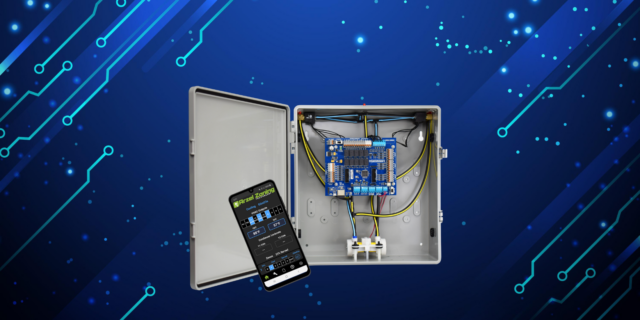
How Many Stages Can the Pro Panel Control? The Pro Panel can handle up to two stages of cooling and up to four stages of heating. It can control multi-stage furnaces, air conditioners, and heat pumps. For example, it can control a two-stage heat pump with two stages of electric heat strips. Or it can […]
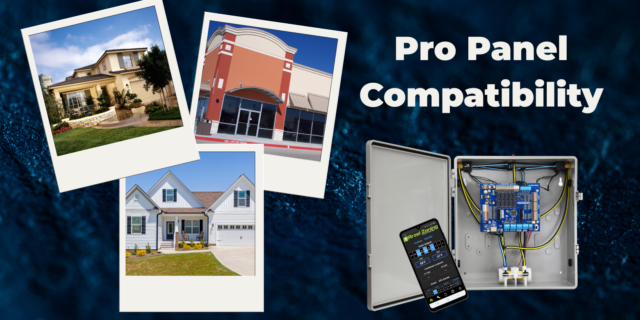
The Pro Panel is a universal zoning system. That means it can control every type of equipment: conventional furnace and air conditioner, split and package geothermal, heat pump, dual-fuel systems, and all-electric systems. The Pro Panel works with multi-stage equipment too, up to 4 stages of heat and 2 stages of cooling. We worked to […]
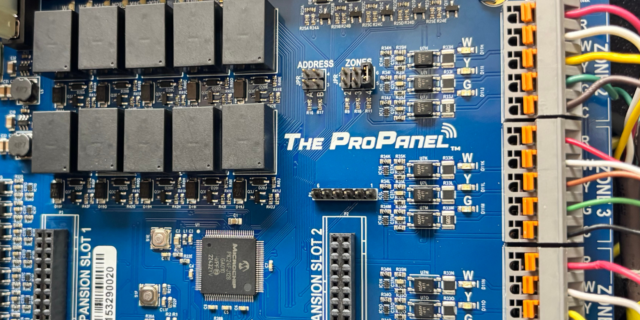
There are three main steps to installing a Pro Panel zone control system: Install the dampers and tubing. Install the panel and thermostats. Connect to the Arzel Pro app to configure the Pro Panel for your installation. After you complete these three steps, your customer will feel the difference immediately. This is one of our […]

Our new Pro Panel control can zone up to 16 zones. That’s twice as many as our biggest AirBoss, and four times what our HeatPumPro can do. With 16 zones possible, the Pro Panel can be a zoning solution for more light commercial buildings and large houses. On top of the additional zones that are […]